
Table of contents
- Overview
- 1. Show Your Face Prominently (The Human Trust Factor)
- 2. Strategically Handle Passions & Hobbies
- 3. Master the Framing and Crop Ratio
- 4. Utilize High-Contrast and Complementary Colors
- 5. Keep the Background Clean and Uncluttered
- 6. Data-Test Your Headshot with Focus Groups
- 7. Align Your Visuals with Your Brand Identity
- 8. Maintain Cross-Platform Visual Consistency
- 9. Avoid Frequent Profile Picture Changes
- 10. Invest in Professional Quality (Lighting & Optics)
Master your online presence with 10 expert tips for crafting high-impact social media profile pictures. Learn framing, colors, and AI prompts.
In the digital ecosystem, your social media profile picture (headshot) is your primary visual handshake. Whether on LinkedIn, Twitter/X, Instagram, or corporate websites, users make micro-judgments about your competence, likability, and trustworthiness in under 100 milliseconds.
An optimized profile picture directly impacts connection rates, job offers, audience growth, and brand authority. Drawing from visual psychology, behavioral analytics, and digital branding best practices, here is the comprehensive guide to crafting a high-impact profile image.
1. Show Your Face Prominently (The Human Trust Factor)


Why it matters: Human psychology is hardwired to seek and decode facial expressions. Research indicates that social media posts and profiles featuring clear human faces receive up to 38% higher engagement and significantly higher trust ratings than non-facial avatars or distant silhouettes.
- Pro Tip: Ensure your headshot occupies approximately 60% to 70% of the overall image frame. Avoid heavy sunglasses, hats, or obstructive angles.
2. Strategically Handle Passions & Hobbies


Why it matters: While showcasing hobbies (e.g., holding a pet, skydiving equipment) can reflect personality, placing them in your primary profile picture often clutters the thumbnail and creates visual noise.
- Pro Tip: Keep your profile picture clear and face-focused. Reserve passion elements for your banner/header image or content feed, unless that specific passion defines your primary professional identity (e.g., a chef in a chef's coat or a photographer with a camera).
3. Master the Framing and Crop Ratio
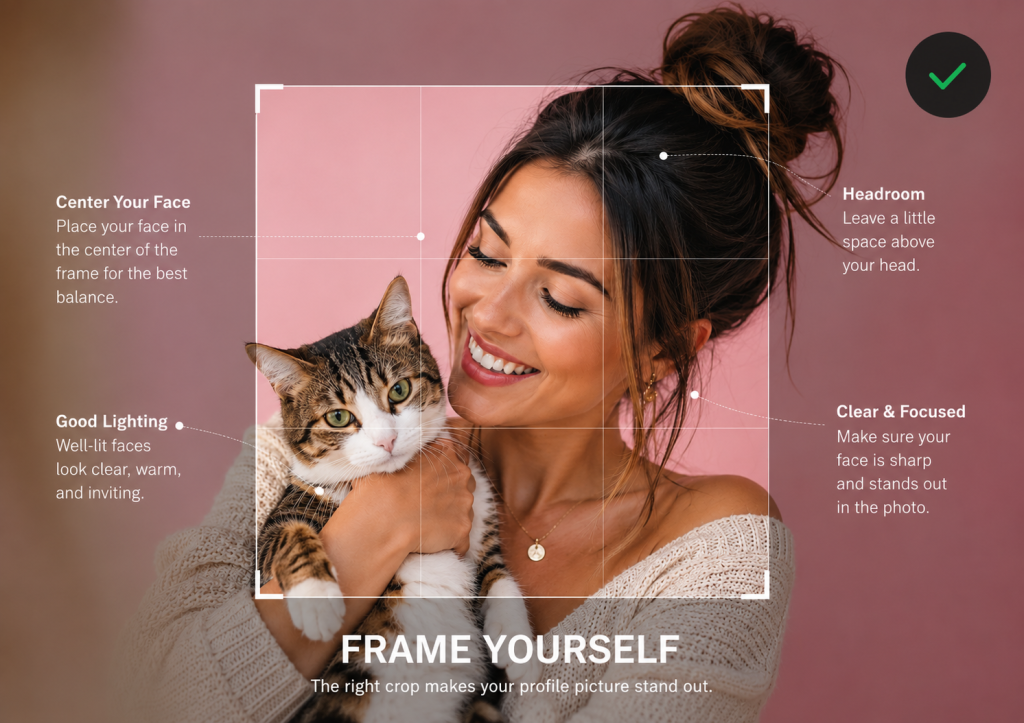
Why it matters: Inappropriate cropping—either zoomed in too close or standing too far away—distorts visual balance. Because profile images are displayed as small circles or squares on mobile devices, incorrect framing renders your face unrecognizable.
- Pro Tip: Use the "Rule of Thirds" or standard head-and-shoulders framing. Your eyes should sit roughly along the upper third line of the frame, with a small margin of space above your head.
4. Utilize High-Contrast and Complementary Colors

Why it matters: Social feeds are fast-scrolling rivers of content dominated by platform-specific base colors (e.g., LinkedIn and X rely heavily on blue/white interfaces). Using high-contrast attire or backgrounds makes your avatar pop out visually.
- Pro Tip: On blue-themed platforms, wear or use warm background hues like amber, warm orange, coral, or soft gold to create instant visual contrast.
5. Keep the Background Clean and Uncluttered
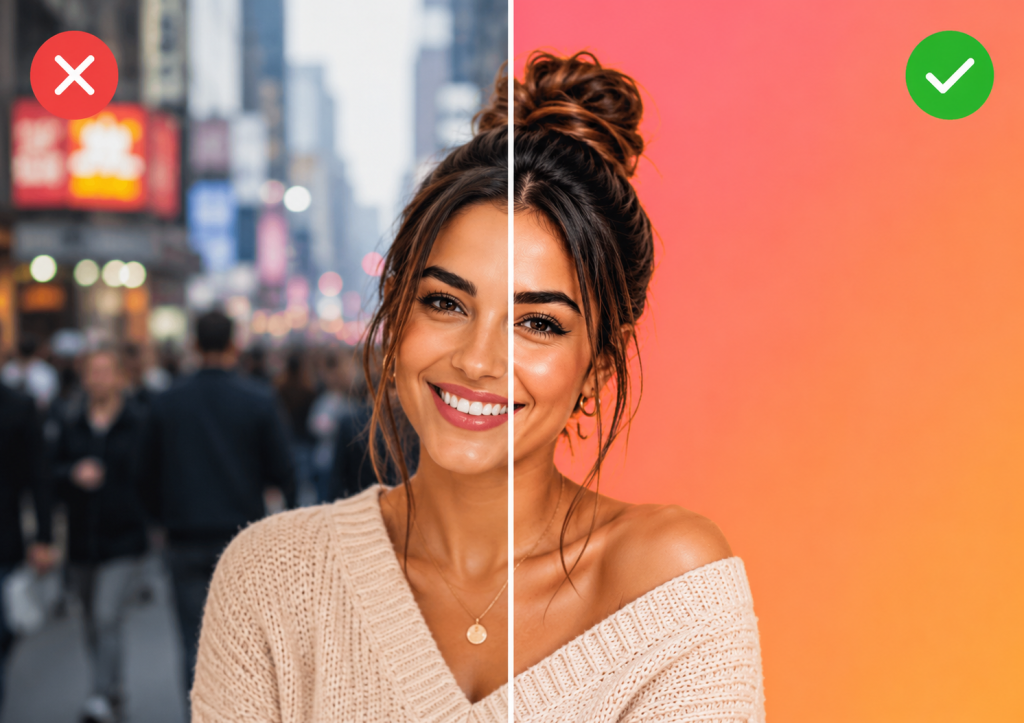
Why it matters: Busy backgrounds compete with your face for viewer attention. A chaotic background creates cognitive load, causing users to scroll past without focusing on you.
- Pro Tip: Use solid colors, smooth gradients, or soft, out-of-focus environment shots (bokeh effect) to make your headshot isolated and crisp.
6. Data-Test Your Headshot with Focus Groups
Why it matters: The "self-perception bias" makes humans poor judges of their own best photos. What you think looks authoritative might come across as cold or distant to prospective clients or employers.
- Pro Tip: Use quantitative testing of other profile pictures or conduct micro-surveys to evaluate your image across three metrics: Competence, Likability, and Influence. For example, you can download TikTok Profile Pictures and make idea from them.
7. Align Your Visuals with Your Brand Identity
Why it matters: Visual consistency reinforces brand recognition. Incorporating subtle elements of your personal or corporate brand—such as signature brand colors, professional attire, or subtle background tones—creates instant association.
- Pro Tip: If your brand identity relies on a signature color (e.g., emerald green), wear a tie, scarf, or background accent matching that exact hex code.
8. Maintain Cross-Platform Visual Consistency
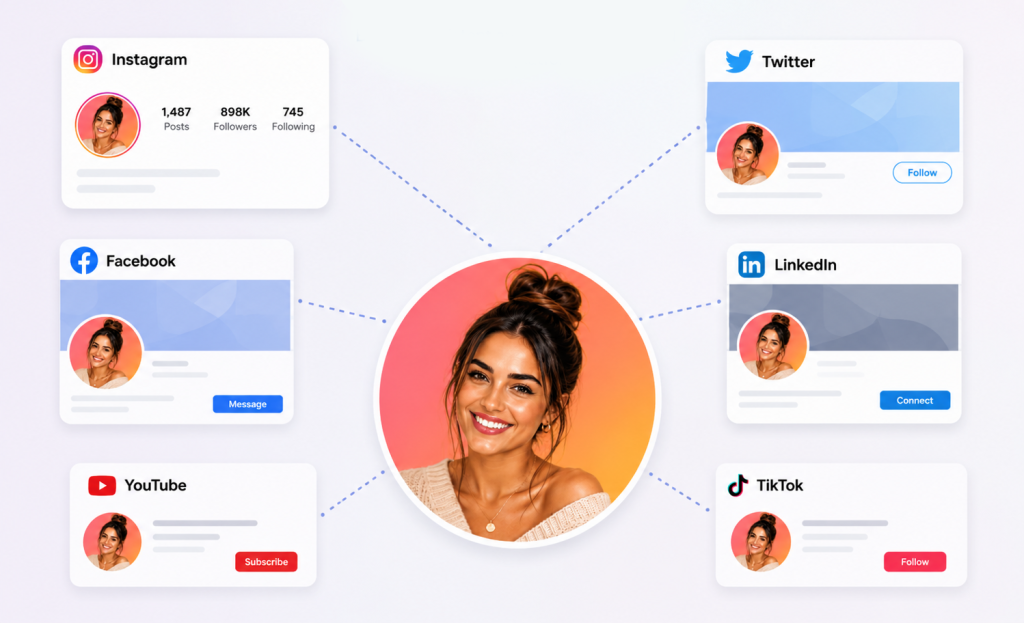
Why it matters: When cross-networking between platforms (e.g., meeting someone on X and searching for them on LinkedIn), using different profile pictures forces users to pause and re-verify your identity, creating friction.
- Pro Tip: Use one master high-quality headshot across all professional touchpoints (LinkedIn, X, YouTube, Gmail, personal website) to build instant cross-channel recognition.
9. Avoid Frequent Profile Picture Changes
Why it matters: Your profile picture serves as a visual anchor. Changing it every few weeks erases established visual recall among your network and reduces engagement on future updates.
- Pro Tip: Retain your core profile picture for at least 12 to 24 months, updating it primarily when your physical appearance changes significantly or when executing a major brand pivot.
10. Invest in Professional Quality (Lighting & Optics)
Why it matters: Pixelated, poorly lit, or grain-heavy phone selfies subconsciously communicate low attention to detail. High-resolution images taken with proper lighting and focal lengths immediately signal professionalism and authority.
- Pro Tip: Use standard portrait focal lengths (85mm or 105mm) to eliminate facial distortion caused by wide-angle smartphone lenses. Ensure key lighting is bright, soft, and diffuse.
Conclusion: Strategic Visuals Drive Digital Authority
In today's fast-moving digital economy, your profile picture is far more than a simple thumbnail; it is an anchor for your personal and professional brand. Every element, from color contrast and focal ratio to background simplicity and facial expression, contributes directly to how your expertise, trustworthiness, and competence are perceived online.
By applying these 10 data-backed visual optimization principles and leveraging modern AI image generation techniques, you eliminate visual friction and position yourself for maximum engagement. Review your current avatar today across all platforms: ensure it tells a compelling, cohesive story, and let your first impression open doors before you even say a word.
Created on 25 July, 2026
Related posts
Leave a comment

ADVERTISEMENT
Categories
Popular posts
ADVERTISEMENT